


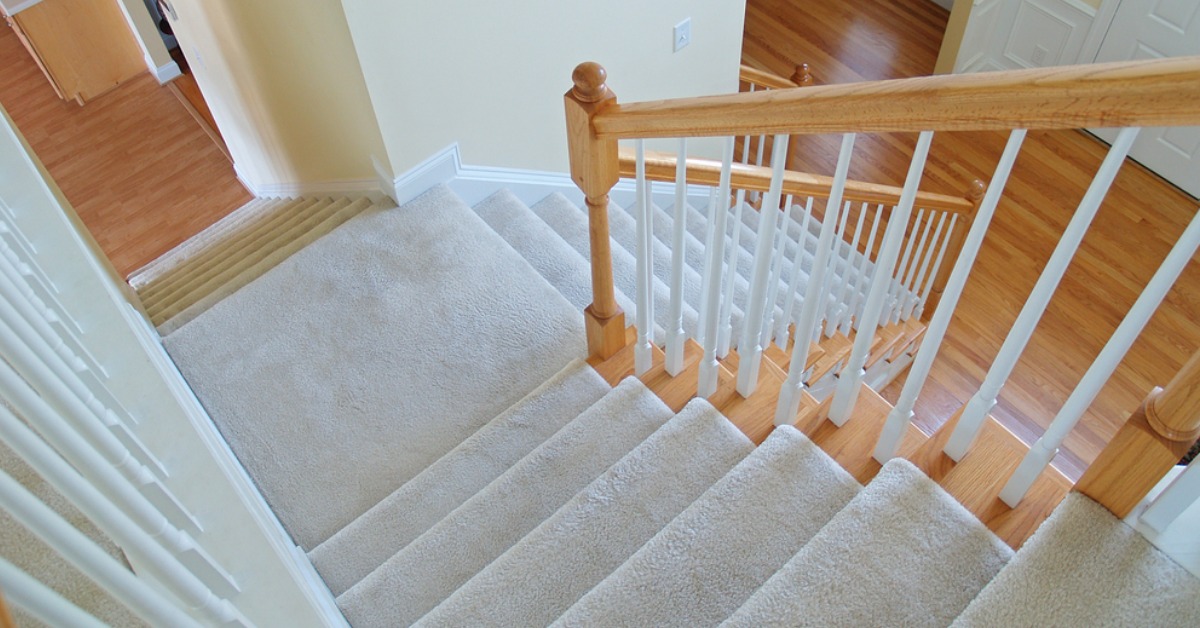
A staircase often connects several visible elements of a home at once, including flooring, trim, walls, landings, and upper-level finishes. Because of this, wood stair handrails should be selected as part of the larger design rather than treated as an isolated stair component. Contractors, flooring professionals, builders, and designers can create a more cohesive result by considering wood species, grain, stain color, profile, and surrounding materials before installation begins.
Start With the Dominant Wood Species
One of the first decisions is whether the handrail should match the primary hardwood used on the staircase.
If the treads and flooring are red oak, using red oak for the handrail can create a consistent appearance. The same applies to white oak, maple, and other hardwood species.
Matching the wood species can be especially useful in interiors where the staircase is meant to blend naturally with the flooring.
However, contrast can also work well.
A darker handrail paired with lighter treads can create a distinct visual line through the staircase. Likewise, a different wood species may be used when the design already includes multiple complementary hardwood tones.
The key is to make the relationship intentional rather than accidental.
Coordinate Grain and Natural Color
Every hardwood species has its own grain pattern, natural tone, and visual character.
Oak tends to show more pronounced grain, while maple often appears smoother and more uniform. These differences can become noticeable when multiple stair components are installed next to one another.
Designers should consider how the handrail will look beside:
- Stair treads
- Hardwood flooring
- Newel posts
- Risers
- Baseboards
- Door trim
- Nearby cabinetry
Using the same species does not always guarantee an exact visual match because natural wood varies from piece to piece. Still, selecting compatible species makes it easier to create a consistent overall appearance.
This is particularly important in open-concept homes where the staircase can be seen from several rooms.
Match or Contrast the Finish Intentionally
Finish selection has just as much influence as wood species.
A handrail may be stained to closely match the stair treads and flooring, or it may use a darker or lighter stain to create contrast.
Both approaches can work.
When matching finishes, contractors should compare actual samples instead of relying only on photographs or screen colors. Wood can appear different depending on grain, lighting, and the type of finish applied.
Sheen should also be considered.
A high-gloss rail installed beside matte flooring may look noticeably different even when the color is similar. Matching or closely coordinating sheen levels can help the staircase feel more connected to the rest of the room.
If contrast is part of the design, it should still relate to another element in the space, such as cabinetry, doors, furniture, or metal stair components.
Choose a Profile That Fits the Interior
The shape of the handrail also influences the overall character of the staircase.
Traditional interiors may work well with more detailed profiles that complement decorative newel posts, turned balusters, and classic millwork.
Modern spaces often favor simpler lines and less ornamentation.
Contractors and designers should look at the rail profile in relation to the entire stair system. A highly decorative handrail can feel disconnected from simple square balusters, while an extremely plain profile may not suit a staircase with elaborate woodwork.
Comfort remains important as well.
The rail should provide a comfortable gripping surface and work with applicable building requirements. Appearance should never be considered without also reviewing usability and installation needs.
Consider Newel Posts and Balusters
The handrail does not function visually on its own.
Newel posts, balusters, and brackets all affect how the finished rail appears.
When wood balusters are used, matching the handrail species and finish can produce a traditional, unified look.
Metal balusters create another possibility. A stained hardwood rail paired with black or dark metal balusters can add contrast while keeping natural wood visible as a major design feature.
Newel posts deserve particular attention because they often become focal points at the bottom and top of the staircase.
The handrail profile, dimensions, and finish should work naturally with the newel design so the connection does not look oversized or undersized.
Review Samples Before Final Selection
Wood should always be evaluated in the environment where it will be installed whenever possible.
Natural daylight, warm interior lighting, wall paint, flooring, cabinetry, and nearby materials can all affect how the finish appears.
A stain that looks neutral in a showroom may appear warmer or darker once installed inside the home.
For this reason, contractors and designers should review samples beside the actual flooring and stair materials before making the final selection.
It can also help to compare several combinations at once. Looking at the tread, handrail, baluster, and flooring samples together gives the project team a clearer idea of how the completed staircase will look.
This planning can prevent late changes after materials have already been ordered.
A well-coordinated staircase depends on more than choosing attractive individual parts. Wood species, grain, stain, sheen, handrail profile, treads, posts, and flooring all need to work together. Flooring dealers, remodelers, builders, installers, architects, and designers can visit Wood Stair Co to explore hardwood handrails and related stair components for upcoming residential projects.
