


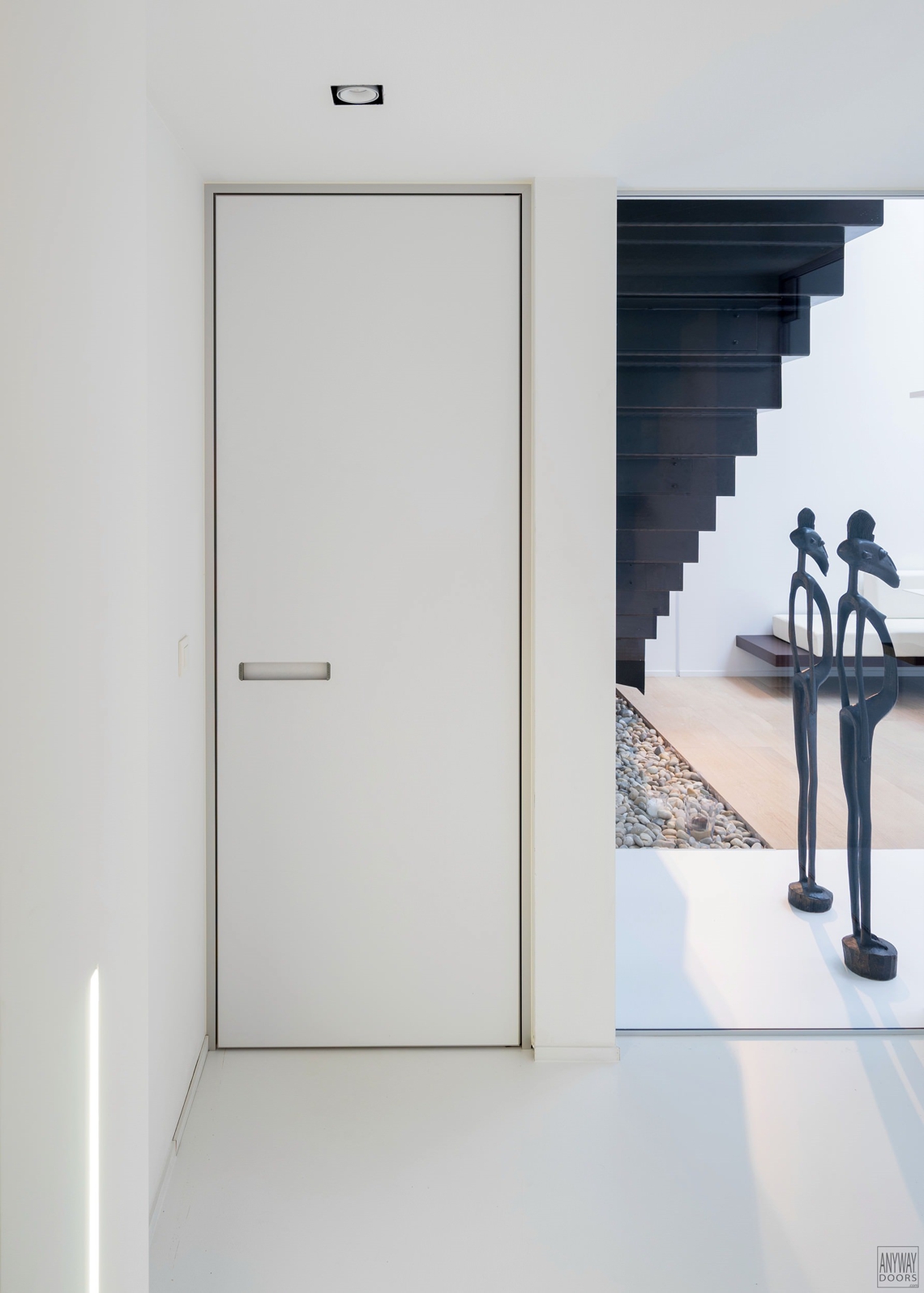
Full-height doors are becoming an increasingly popular choice for homeowners who want their interiors to feel taller, cleaner, and more architecturally refined. Unlike conventional doors that leave a noticeable section of wall between the top of the frame and the ceiling, full-height designs extend much farther upward, sometimes reaching almost or completely to the ceiling.
When thoughtfully specified, Modern interior doors can do more than separate rooms. Their height, proportions, finishes, and hardware can influence how spacious, connected, and sophisticated an entire home feels.
What Are Full-Height Interior Doors?
Full-height interior doors are taller than traditional interior doors and are designed to extend from the floor toward the ceiling. In some installations, the door reaches the ceiling line itself, creating a floor-to-ceiling appearance.
The concept works particularly well with minimalist architecture because the door can become part of the wall rather than looking like a separate object placed inside it. Flush surfaces, concealed frames, minimal handles, and simple finishes can reinforce this integrated appearance.
They Make Ceilings Feel Higher
One of the biggest visual advantages of a full-height door is its ability to emphasize vertical space. The eye naturally follows the tall edge of the door upward, creating a stronger connection between the floor and ceiling.
Standard doors can leave a substantial horizontal strip of wall above the opening, particularly in homes with high ceilings. A taller door reduces this interruption and can make the room appear more vertically generous.
This does not mean every room needs a ceiling-height door. Proportion matters. A tall door generally looks most natural when its height complements the ceiling and the scale of surrounding architectural features.
A Cleaner, More Contemporary Appearance
Modern interiors often emphasize simplicity, uninterrupted surfaces, and carefully controlled visual details. Full-height doors support this design philosophy exceptionally well.
A plain flush door extending almost to the ceiling can create a smooth architectural plane. When paired with concealed hinges and minimal trim, there are fewer visual interruptions around the doorway.
This approach can be particularly effective in hallways, bedrooms, home offices, dressing areas, and other spaces where multiple doors are visible from the same viewpoint.
They Create Stronger Visual Continuity
Interior doors can influence how individual rooms relate to one another. When several doors share similar heights and design details, the home can develop a more consistent visual rhythm.
For example, a hallway with several standard-height doors may have repeated gaps above each opening. Replacing them with carefully coordinated taller doors can create a more unified sequence of vertical lines.
The result is not necessarily about making every door identical. Instead, the goal is to make the differences between spaces feel intentional and coordinated.
Full-Height Doors Can Improve the Flow of Natural Light
Height can also have practical visual benefits when the door incorporates glass or translucent materials. A glazed full-height door can provide a larger area through which light passes between adjoining spaces.
This can be useful in rooms that receive limited daylight, such as interior offices, corridors, studies, or areas positioned away from exterior windows.
Frosted or textured glass can provide a useful balance between brightness and privacy. Fluted glass, for example, can soften views while still allowing light to move through the opening.
They Work Beautifully With Minimalist Design
Full-height doors naturally complement minimalist interiors because their large, uninterrupted surfaces provide a strong architectural element without requiring elaborate decoration.
A simple door in white, warm oak, walnut, grey, or another carefully selected finish can blend with surrounding walls or provide subtle contrast.
For an especially understated appearance, homeowners may choose:
- Flush door panels
- Concealed hinges
- Minimal door frames
- Recessed or slim handles
- Neutral finishes
- Matching door and wall colours
- Vertical wood grain
- Subtle textured surfaces
These details allow the height of the door to become the main design feature.
They Offer Greater Design Flexibility
Full-height doors are not limited to one opening style. Depending on the space, they can be designed as hinged, sliding, pivot, or other customized systems.
Sliding versions can be especially useful when floor space is limited because they avoid the swing area required by conventional hinged doors. Pivot systems, meanwhile, can create a dramatic architectural statement where there is sufficient room and appropriate structural support.
The choice should be based on the room’s dimensions, circulation pattern, furniture arrangement, and desired level of privacy.
They Can Strengthen Privacy Between Spaces
A taller door can create a more substantial physical separation between rooms. When combined with a solid-core construction and appropriate seals, the door can also contribute to a quieter interior environment.
This makes full-height doors particularly attractive for bedrooms, home offices, studies, media rooms, and other areas where separation matters.
However, the height itself does not automatically make a door soundproof. The core, frame, seals, gaps, hardware, and surrounding wall construction all influence acoustic performance.
Full-Height Doors Can Make Small Spaces Feel More Refined
It may seem that oversized doors are only suitable for large luxury homes, but they can also work well in smaller interiors.
A carefully proportioned tall door can draw attention upward instead of emphasizing limited floor area. In a compact hallway or apartment, this vertical emphasis can help the space feel more intentional and less visually cluttered.
A minimalist door with little or no decorative trim can also reduce the number of competing lines within a small room.
Choosing the Right Material
Material selection becomes particularly important as door height increases. Taller door leaves can be heavier and require appropriate construction, hinges, jambs, and installation methods.
Common choices include engineered wood, natural wood, veneers, laminate finishes, painted surfaces, and glass combinations.
Solid or substantial constructions can provide a premium feel, while engineered materials may offer greater dimensional stability depending on the product and environment.
The best material depends on the desired appearance, budget, humidity conditions, maintenance requirements, and expected level of daily use.
Consider the Ceiling Before Choosing the Door
Full-height doors should be considered as part of the room’s overall architecture rather than selected at the final decorating stage.
Before installation, homeowners should consider the ceiling height, finished flooring, skirting or baseboards, lighting, nearby windows, built-in furniture, and adjoining doorways.
Tall doors can require more precise framing and finishing because small inconsistencies become more noticeable along a large vertical surface. Planning the opening early can therefore produce a much cleaner finished result.
Hardware Makes a Significant Difference
Hardware can either enhance or undermine the streamlined appearance of a full-height door.
Large decorative handles may create a strong focal point, while slim levers, recessed pulls, or integrated handles can maintain a quieter aesthetic. Concealed hinges are another popular option because they reduce visual interruptions along the door edge.
The hardware should also be selected according to the door’s weight and frequency of use. Taller and heavier doors may require additional hinges and appropriately engineered hardware rather than standard components.
Are Full-Height Modern Interior Doors Worth It?
For homeowners focused on contemporary design, full-height doors can be an excellent investment in the visual character of a home. They can emphasize ceiling height, create stronger vertical lines, improve consistency between rooms, and provide opportunities for glass, wood, and minimalist finishes.
They are not necessarily the right choice for every property, however. Low ceilings, unusual structural conditions, limited budgets, or traditional architectural styles may make standard-height doors more appropriate.
The key is to choose a height that works with the architecture rather than simply choosing the tallest door available.
Final Thoughts
Full-height doors can transform a relatively ordinary doorway into an architectural feature. Their greatest advantage is not simply their extra height but the way that height changes the relationship between walls, ceilings, rooms, and circulation spaces.
When combined with clean finishes, appropriate hardware, careful proportions, and professional installation, Modern interior doors can give a home a taller, calmer, and more sophisticated appearance. For contemporary homes especially, full-height designs offer a practical way to make interior transitions feel deliberate rather than purely functional.
