


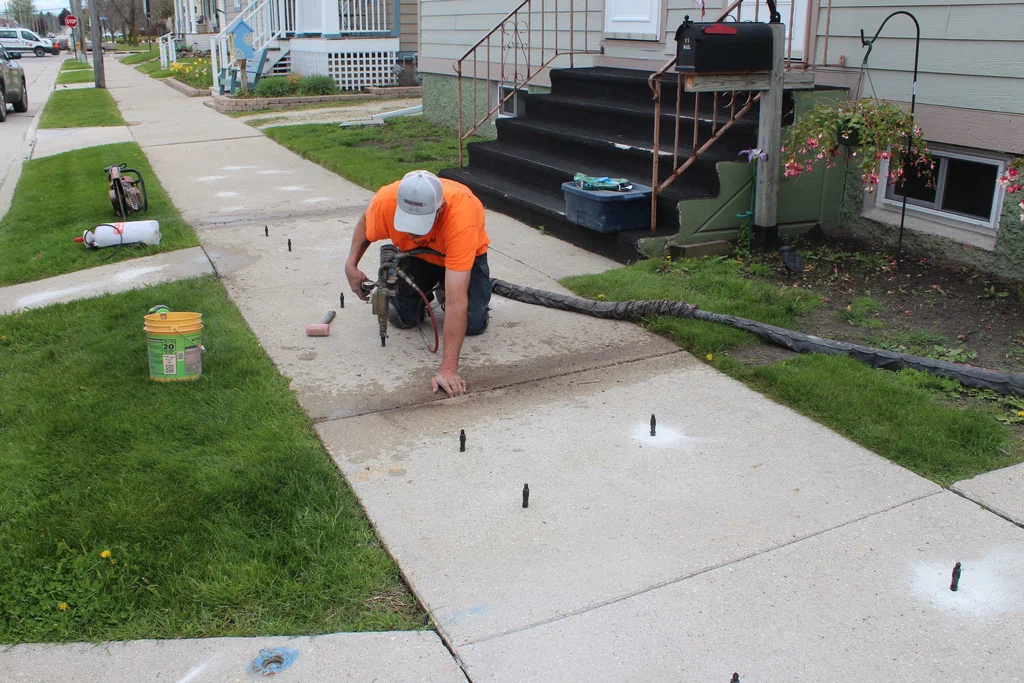
Concrete does not become uneven overnight. It begins with subtle changes that are fairly easy to overlook, such as a slight dip in the driveway, a crack in the sidewalk, or water that lingers longer after rain. When left alone, these small changes usually become harder to ignore. A lot of people nowadays are considering Concrete Leveling in Marion, IA before the damage spreads further. Here are some of the early signs worth paying attention to.
What Are the Common Signs That Your Concrete Needs Leveling?
Concrete usually changes so gradually that you hardly notice it at first. Catching those early signs can save you from dealing with a much bigger repair later:
Uneven or Sunken Concrete Surfaces
Even a slight difference in height can change the way a concrete surface looks and feels. As the slab settles, the unevenness usually becomes more noticeable over time.
- Parts of a driveway, sidewalk, patio, or garage floor sit lower than the surrounding concrete.
- Walking or driving across the surface feels uneven.
- Small height differences can gradually become trip hazards.
Cracks That Continue to Grow
Small cracks are common, but they should not continue to widen. Expanding cracks often indicate that the concrete beneath the surface is still shifting.
- Existing cracks become wider or longer over time.
- New cracks begin appearing near older ones.
- Early repairs help prevent more extensive damage.
Water Collects After Rain
Water should drain away from concrete instead of pooling on the surface. Persistent puddles often indicate that part of the slab has settled.
- Low spots collect rainwater after every storm.
- Standing water can gradually affect nearby concrete and landscaping.
- Leveling restores proper drainage across the surface.
Why Is It Better to Address Uneven Concrete Early?
Most concrete problems start out looking fairly harmless. Leave them alone for long enough and they rarely stay that way. Acting early often means a simpler repair and fewer headaches later on.
Depending on the cause of the settlement, professionals may recommend polyurethane foam injection or mudjacking to lift and stabilize the concrete. Both methods raise the slab without requiring complete replacement, although the most suitable option depends on the condition of the concrete and the underlying soil.
Helps Prevent Safety Hazards
Uneven concrete creates more than a cosmetic problem. Even small height differences can increase the risk of trips and falls around the property.
- Raised edges make walkways less safe.
- Sunken sections create uneven walking and driving surfaces.
- Early repairs reduce the risk of accidents.
Helps Avoid Bigger Repairs Later
Concrete rarely stops moving on its own. Addressing small problems early helps prevent the damage from spreading to nearby slabs.
- Many homeowners choose concrete leveling in Marion, IA while the damage is still limited.
- Early repairs help prevent further settlement.
- Repairing one uneven section is often easier than replacing larger areas later.
Restores the Appearance of Your Property
Damaged concrete can make an otherwise well-maintained property look older than it is. Restoring uneven surfaces improves the overall appearance without major renovation.
- Driveways, patios, and sidewalks look cleaner and more uniform.
- Level surfaces create a more finished outdoor space.
- A straightforward repair can noticeably improve curb appeal.
Final Thoughts
Small changes in concrete are easy to ignore, especially when they happen little by little. The trouble is, they rarely stop there. Dealing with uneven slabs early can help keep your property safer, improve the way it looks, and prevent a small issue from turning into a much bigger repair later on.
